Friday, May 15, 2020

Challah for a Congregation of Three


Last week I received in the mail a special package, containing a rare item not seen in these parts since late February.  My dealer, who is my sister-in-law, sent me a small pouch of yeast, enough for baking several loaves of bread.  She came upon this yeast because a co-op in her neighborhood bought a gigantic package of yeast (the only volume that can be bought these days) and then divvied it up into reasonable family-sized amounts.  I am grateful to benefit from their resourcefulness.

The challah recipe I have made in the past is for a "congregation-sized" loaf, or 24 minyan-sized loaves.  But our congregation of three people can't and shouldn't eat that much challah in a short period of time. The freezer is still chock full of stuff, so there's no room for freezing extra bread.

The recipe for congregation-sized challah calls for 6 cups of flour.  The recipe below calls for 4 cups.  So this is what I made today.

I do not have bread flour.  I used all-purpose flour.  I used honey instead of sugar.  I kneaded the dough by hand, a very satisfying activity.


Challah Bread
(medium-sized loaf)

MAKES 1 loaf (about 20 slices)

INGREDIENTS
1 cup lukewarm water
2 teaspoons active dry or instant yeast
4 to 4 1/2 cups all-purpose flour
1/4 cup granulated sugar
2 teaspoons salt
2 large eggs
1 large egg yolk (reserve the white for the egg wash)
1/4 cup neutral-flavored vegetable oil, such as canola (or ¼ cup melted butter)


INSTRUCTIONS
1.    Dissolve the yeast. Place the water in a small bowl, sprinkle with the yeast and a healthy pinch of sugar, and stir to combine. Let stand until you see a thin frothy layer across the top, 5 to 10 minutes. This means that the yeast is active and ready to use. (If you do not see this or if your yeast won't dissolve, it has likely expired and you'll need to purchase new yeast.)

(The original recipe had steps 2 and 3 reversed.  It seems better and easier to me to add the flour last.)

2. Add the eggs, yolk, and oil. Stir the yeast-water mixture.  Add the sugar, salt, eggs, egg yolk, and oil. 

3. Add the flour. Add 4 cups of the flour.

4. Mix to form a shaggy dough.  Mix everything with a wooden spoon or rubber spatula until a shaggy dough that is difficult to mix forms.


5. Knead the dough for 6 to 8 minutes. Fit the mixer with the hook attachment and knead on low speed for 6 to 8 minutes. (Alternatively, turn out the dough onto a floured work surface and knead by hand for about 10 minutes.) If the dough seems very sticky, add flour a teaspoon at a time until it feels tacky, but no longer like bubblegum. The dough has finished kneading when it is soft, smooth, and holds a ball-shape.


6. Let the dough rise until doubled. Place the dough in an oiled bowl, cover with plastic wrap, and place somewhere warm. Let the dough rise until doubled in bulk, 1 1/2 to 2 hours.


7. Divide the dough and roll into ropes. Divide the dough into equal pieces (3 or 4 or 6), depending on the type of braid you'd like to do. Roll each piece of dough into a long rope about 16 inches long. If the ropes shrink as you try to roll them, let them rest for 5 minutes to relax the gluten and then try again.

I did a 4-strand braid.  The main thing to remember is 4 over 2, then 1 over 3, then 2 over 3.  Watch this video for details on a 4-strand braid. 


8. Braid the dough. Gather the ropes and squeeze them together at the very top. If making a 3-stranded challah, braid the ropes together like braiding hair or yarn and squeeze the other ends together when complete. 

9. Let the challah rise. Line a baking sheet with parchment paper. Place the braided loaf on top and sprinkle with a little flour. Cover with a clean kitchen towel. Let rise in a warm place away from drafts until puffed and pillowy, about 1 hour.


10. Brush the challah with egg white. About 20 minutes before baking, arrange a rack in the middle of the oven and heat to 350°F. When ready to bake, whisk the reserved egg white with 1 tablespoon of water and brush it all over the challah. Be sure to get in the cracks and down the sides of the loaf.

11. Bake the challah 30 to 35 minutes. Bake, rotating the baking sheet halfway through, until the challah is deeply browned and registers 190°F in the very middle with an instant-read thermometer, 30 to 35 minutes total.

12. Cool the challah. Let the challah cool on a cooling rack until just barely warm. Slice and eat.

The original recipe is from here:

Thursday, May 14, 2020

First lines: Feb-Mar-Apr 2020 edition

This photo was taken at a place that I am very fond of.
Alas, it is closed right now, until further notice.

Let’s face it.  For some of us, it’s been hard to concentrate during the past three months.  In January I finished reading six books.  In Feb-Mar-Apr I finished reading six books, and that was a struggle.

Here are the first lines of those six books.

Book 1
1: Trigger Warning
I’m not mad.
            Look, everybody is called a traitor once or twice in their lives, right?  Everybody gets falsely accused and wrongly investigated by the FBI and has to testify in front of Congress for over thirty hours, answering the same stupid politically motivated questions over and over again, don’t they?


Book 2
This is a love story. In 1916, during the First World War, two young
Americans met by chance on a mysterious and now-forgotten estate near Chicago.


Book 3
1967
Willa Drake and Sonya Bailey were selling candy bars door-to-door. This was for the Herbert Malone Elementary School Orchestra.


Book 4
Valentine’s Day
As always, Martha Storm was primed for action. Chin jutted, teeth gritted, and a firm grip on the handle of her trusty shopping trolley.


Book 5
Prologue 
Joshua Poldark died in March 1783. In February of that year, feeling that his tenure was becoming short, he sent for his brother from Trenwith.

Book 6
June 1988
“Hi, Caller, You’re on the air with Garden Talk.”
Mona Butterfield leaned forward in her seat and took a deep breath to calm her nerves.


And the titles revealed:

Book 1
Triggered:  How the left thrives on hate and wants to silence us , by Donald Trump Jr. , © 2019. 
How horrible that this was the only book I finished reading in February.  I was reading lots of news articles and knocking on doors to get primary election petition signatures, and following primary elections.  All the while, the coronavirus outbreak was growing. 

Looking back at the "first lines" quote above, it seems highly ironic.  Which political figure testified for hours and hours, answering politically motivated questions?  Hmm?  Benghazi hearings, anyone?

I read this in the hardback version.  Because the library is now closed, this book is still sitting in our house.  

* * * * * * *

In March I was able to finish two books.

Book 2
The Woman Who Smashed Codes: A True Story of Love, Spies, and the Unlikely Heroine Who Outwitted America's Enemies, by Jason Fagone. © 2017
A fascinating look at the lives of code breakers.  And also a love story.  Read for book club, with a virtual discussion via video meeting, while in coronavirus soft lockdown.  This library book is also still in our house. 


Book 3
Clock Dance by Anne Tyler © 2018
The library system had a list (back in March) for those who want to read about pandemics, and another list for those who don’t. These were on the latter list.   It was great to read an Anne Tyler novel.  She always takes me back to my hometown.  Read on kindle, borrowed from the library.


* * * * * * *

In April I found enough concentration to finish three books.

Book 4
The Library of Lost and Found, by Phaedra Patrick © 2019
Borrowed from the library on kindle.  Also on library's list for calming down.   It fit the bill nicely.


Book 5
Ross Poldark: A Novel of Cornwall, 1783-1787 (The Poldark Saga Book 1)
by Winston Graham © 1945
Having seen the first three seasons of the TV series on disk from the library, and having been prevented by coronavirus from borrowing the next seasons from the library, I decided to read the series.   

Reading a book which you already know the plot line of may not be everyone’s cup of tea, but I enjoyed this reading, and not only because it does include the occasional cup of tea.  The diatribes of Jud Paynter, the servant, while drunk, I found highly amusing.  His inebriated speeches appear in the TV series only in an abbreviated fashion.  Reading this book was somewhat like re-reading the Harry Potter books (I have re-read books 1-5).  It is comforting to re-enter the lives of the characters I know, and I am less anxious about the lot.   (kindle version borrowed from library)


Book 6
Through the Channel, by Melissa Westemeier (third in the Bassville Stories series).  © 2020
What a pleasure to read this book.  I loved meeting these characters again and spending some time in this town – nothing like my town or our current times, which makes it a perfect book for right now.   Mona is endearing, and Maw is hilarious.  And in Chapter 25 I found a special surprise.  Manure features prominently in some scenes, but so do raspberries (the fruit).   This book is still in our house because I bought it and it is a copy with a personal inscription to me, signed by the author. 

The Bassville Stories series consists of these three volumes:


I also finished most of this book, but can’t claim to have read all of it.
Howard Thurman: Essential Writings, Selected with an Introduction by Luther E. Smith, Jr.  © 2006.


These photos were taken outside our public library.
Our dear public library! 
I look forward to returning there sometime, maybe next year!


Tuesday, April 28, 2020

Anecdotal Evidence: The Miracle of the Secret Sauce

Part of an occasional series on "statistics."  A good statistician will tell you that those two words – anecdotal and evidence – never belong next to each other.  But I am only a mediocre statistician so I proceed without fear to present some anecdotal evidence on random topics.

* * * * * * * *

If I put my secret sauce on food they hate, the family will eat it, and like it.

Evidence, with n=2 foods hated and n=2 food haters.

Evidence for n = tofu
For a long time, I have been trying to cook tofu that is palatable to the rest of the family, with the goal of eating less meat-based protein. I like tofu, simply pan-fried, but the other two don’t. 

I asked a pastor friend of mine the best way to cook tofu, and he said, “You have to season the hell out of it.”  Which seems like reasonable advice from a pastor.  I’ve tried a number of different recipes over the past few years, but nothing appealed to my clientele.

Saturday April 18, 2020, Day 34 of stay-at-home.
I decided that dinner would be tofu in honey-garlic sauce, the family’s dislike of tofu be damned (I feel my pastor friend would agree with that sentiment).

A miracle!  All members of the Common Household liked the tofu! The key was not the honey-garlic sauce, but my secret sauce.  Here’s how I made it:

I cut the tofu in pieces about ½ inch thick, and marinated it in a mixture of honey, soy sauce, and minced garlic.  Dipped it in flour, and then fried it (almost burned it, but not quite).

I transferred the tofu to a serving bowl. I put about ¼ cup of plum sauce (from a jar) in the hot pan, plus a dollop of ginger paste (from the tube) and also added the remainder of the honey-garlic sauce from the marinating step.  I heated it briefly, and then poured it over the tofu.  Then, like Mikey in the Life Cereal® commercials of my childhood, the tofu-haters ate it, and declared that it was actually tasty.  Success! 


Evidence for n = broccoli
Saturday April 25, 2020, Day 41 of stay-at-home
At 6 PM it became clear to me that no one else was going to make dinner.  I yanked some tilapia out of the freezer.  I also realized we had fresh broccoli, bought on Monday, that needed to be cooked immediately.  As I hauled the broccoli out of the fridge, the other Common Household residents made faces and declared they would not eat it. 

We'll see about that, I thought.  I sliced some onions and then threw the fresh broccoli in the frying pan.  After the broccoli was cooked I took it out of the frying pan, and I made my secret sauce:  some minced garlic in the pan, fry for 1 minute.  Then add 1/4 cup of plum sauce and a dollop (about a tsp) of ginger paste.  Stir for another minute to heat, then pour over the broccoli w/onions.  Everyone ate the broccoli, despite their declared hatred for it.  Secret sauce for the win!

God help me if the family decides that I must eat mayonnaise during stay-at-home.  I will refuse, because mayonnaise is a sauce from hell.

More anecdotal evidence:
California
Furniture

* * * * * * * *

Here is the original recipe for Honey-Garlic sauce, which is more involved than what I did for the tofu.

Honey-Garlic  Sauce

Ingredients
1/3 c. honey
1/3 c. soy sauce
2 garlic cloves, minced
Juice of 1 lime
1 tbsp. sriracha
1/4 c. water
2 tsp. corn starch
1/4 c. sliced scallions (optional)


DIRECTIONS
In a small bowl, whisk together cornstarch and water, until the cornstarch dissolves completely. Set aside.

Combine soy sauce, honey, garlic, lime juice and Sriracha in a small saucepan over medium heat.

When the mixture reaches a boil, reduce heat and add the cornstarch mixture. Bring to simmer again and cook until sauce thickens, about 2 minutes.

How to use:
Use on broiled fish (apply in the last few minutes of cooking).  Or on baked or stir-fried vegetables.  Or on tofu.

Saturday, April 4, 2020

Sacred Use for a Kippah


Greater love has no one than this: that she wear a mask when venturing into a public place during a novel coronavirus outbreak.  My mask protects you, and your mask protects me.   
- The Book of Admonitions 15:12-13


And you shall fashion a face mask out of any cloth you find in the deep recesses of your abode.  Lo, you shall unearth the sewing box from its hiding place of the past 20 years and you shall discover bands of elastic that appear to still be stretchy, even though they be as old as Methuselah.  Praise the Lord.

The Lord will place upon your heart the shape of a face mask; God will write upon your mind the shape of a kippah.  Behold, the shapes are nearly the same.  And you will remember the way in which you ordered far more kippot than necessary, for each of your children’s bnai mitzvot, because they had to be ordered in batches of 144.  The Spirit of God will lead you to your office, on top of that filing cabinet, where you will find the plastic bag that, lo and behold, is still filled with kippot from those blessed events. 

And you shall engage in all kinds of craft, just as in the great tradition of Oholiab and Bezalel, including cutting, tying knots, stapling, and taping.  You shall find a youtube video to get you started.  Thus shall you create a face mask so that you may keep the ordinances and statutes concerning the protection of your community from the covid-19 virus.  And God will declare this to be a holy use of the kippah.
- The Book of Exertions 5:23-31

* * * * * *

I made a passable face mask out of kippot from my children’s bar & bat mitzvahs.

This is not meant to be a mask for medical staff.  I made this because the Governor of Pennsylvania announced that in the event that we ordinary folk must go to a public place, such as the grocery store, we should each and every one of us wear a mask.  It's impossible to buy a mask these days, so we must be creative and make our own.  Having a homemade mask does not mean we should go traipsing around and mingling in public places, but it makes it safer for those around us when we must go out in public. 

Here’s how I did it.

This youtube video gave me my starting point.
(I am too tired to figure out how to embed the video.  If the link doesn't work, go to youtube and try searching on "Homemade Kippah Masks Otto Dube".)


Materials used for one face mask:
a kippah (yarmulke, skull cap)
two 10 inch pieces of elastic
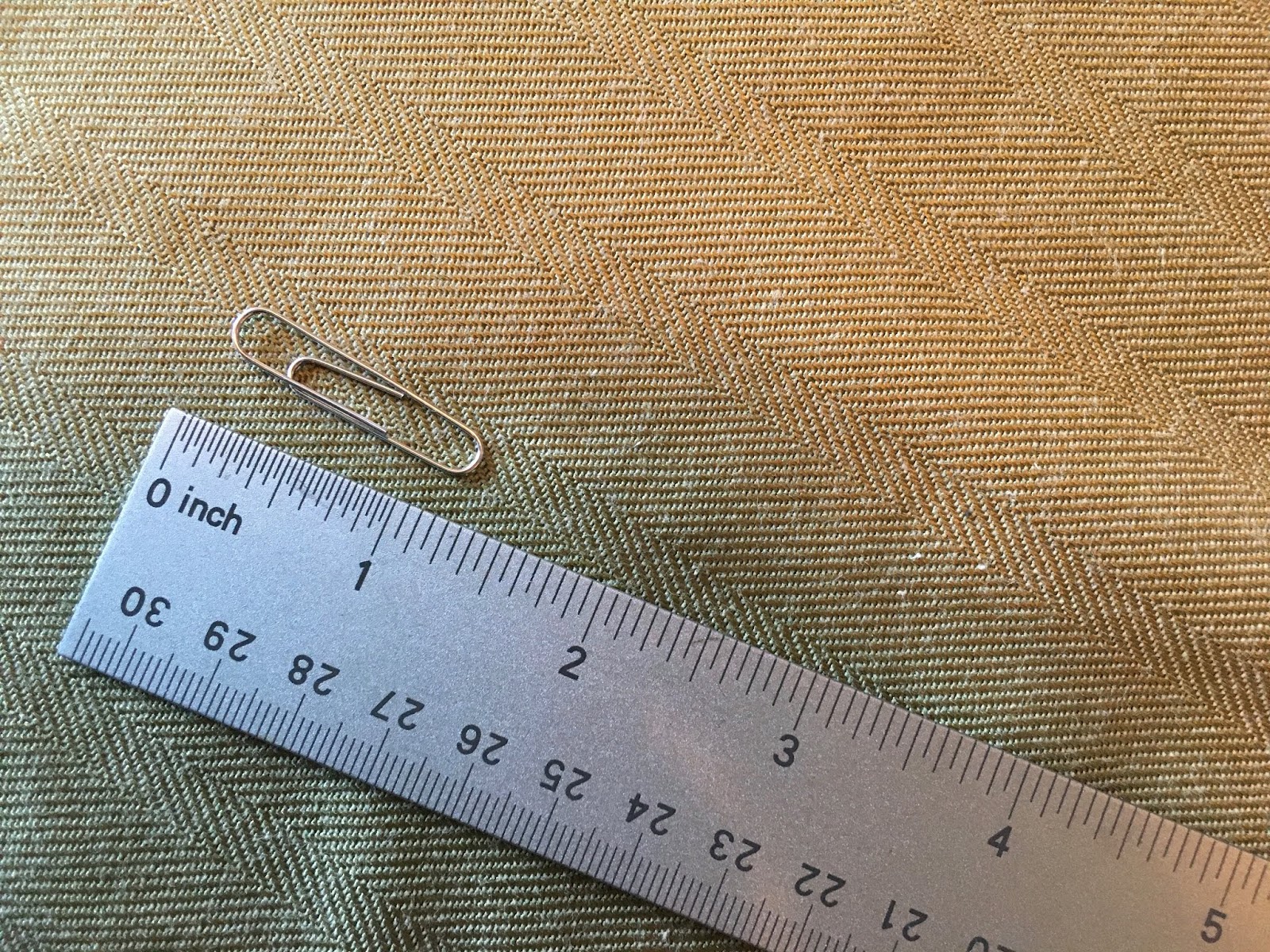
standard-size paper clip
scissors
stapler
masking tape or freezer tape

A kippah is a yarmulke, the head covering that many Jews wear.  For a bar/bat mitzvah, it is customary to order kippot, one for every guest, with the budding adult’s name stamped on the inside.  We have a number of these left over from the ceremonies of our three children.  The top layer is some kind of nylon or satin fabric; the inside layer is something sort of cottony.

Once I found our leftover kippot, I washed a few, along with some cotton napkins that also might be made into face masks.  The kippot survived the washing machine just fine.   I believe this is a small miracle.

I tried the technique in the video with a kippah from my daughter’s bat mitzvah.  The trim around the edge made the resulting mask bunch in the wrong places.  And the rubber bands I had were very uncomfortable and did not fit correctly. 

So I started over, and set to work to remove the gold braid trim.  This was easier than I thought it would be.  After a few snips, I was able to pull the trim right off.  The rest of the kippah remained intact.  Whew!


Using some very old elastic I found in my ancient sewing box in the basement, I then measured a 10 inch length of elastic, and then a second 10-inch piece.  I put the two ends together, and tied a simple knot.  And again for the second piece of elastic, resulting in two loops of elastic, like a rubber band, but better sized and more comfortable.

Sorry it's blurry.  You put the two ends together,
wrap 'em around your finger, and pull through to make
a knot.  If you are Scout you will know the
name of this knot, but I do not.
The resulting knot.  Blurry, I know.


I then used this elastic loop as in the video – I found the inside seam in the kippah, placed the elastic loop there, folded over the edge of the kippah, and stapled it.  Just one staple seems sufficient.  And repeat on the opposite end of the kippah.


Voila!


Then I took a standard-sized paper clip, bent it straight, and then bent it some more to put a little bump in the middle.  This will be to bend over your nose, for a better fit.


I put the paper clip at the top of the kippah-mask on the inside.  I taped it there with freezer tape.  We will see how the tape fares goes when I put this mask in the washing machine for re-use.
In this photo, the top of the face mask is to the left.


Then I folded over the kippah fabric on top of the paper clip, and put in four staples.


The mask is done.


You put the kippah over your nose and mouth, attaching the elastic behind your ears.  Press down on the paper clip to make it tight with your nose. 

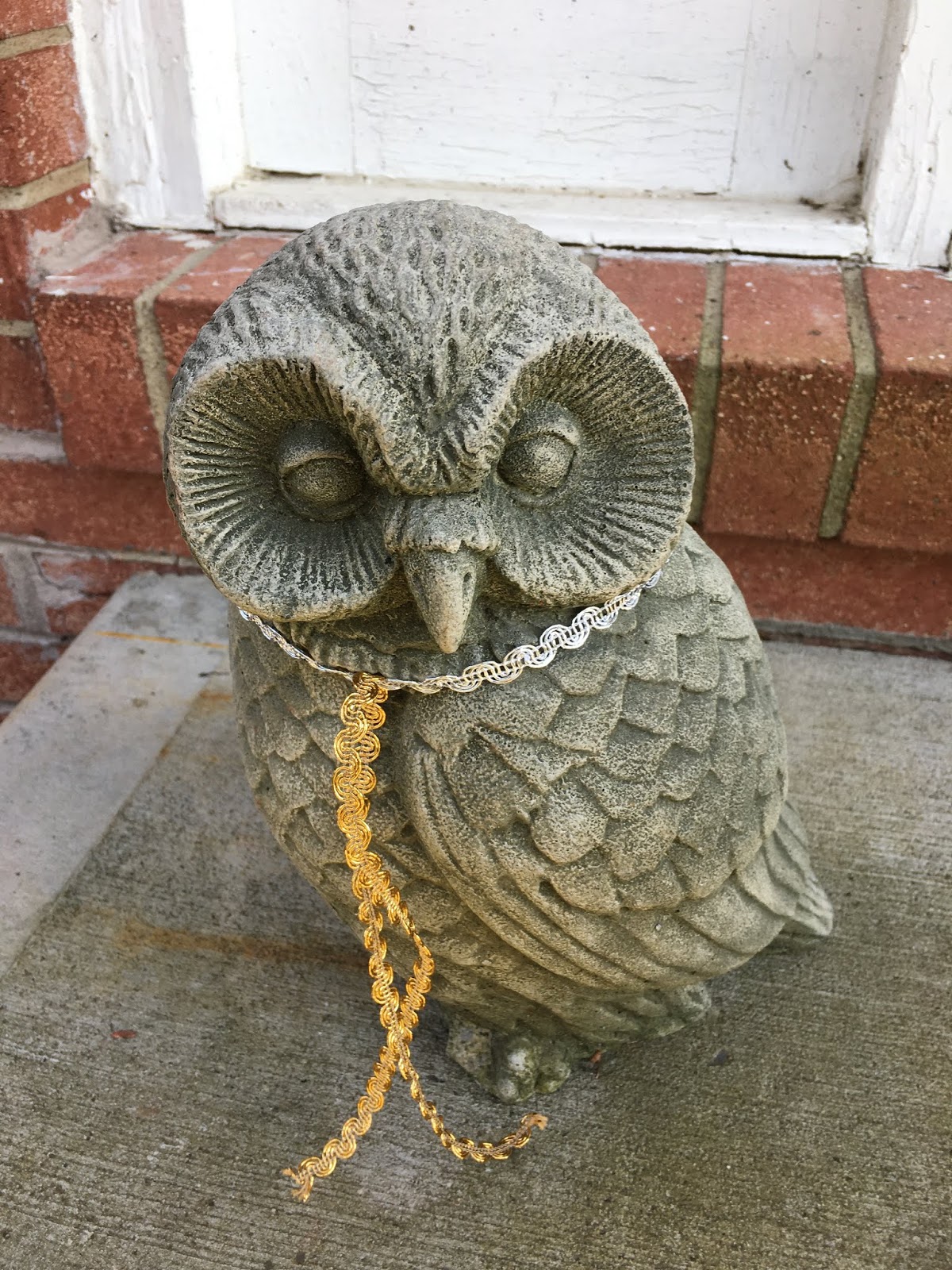
Take the decorative trim that you removed from the kippah and find a new decorative use for it.
Press gently on the paper clip portion of the mask
to help the mask fit closely over your nose.
It won't be a completely tight seal.  


New use for decorative trim

I wore this mask when we went tonight to pick up pizza.  This was the first time I had been out of my neighborhood in more than a week.  This was our first time getting take-out food. We've been cooking in, mostly.  The mask worked fine, and it's now ready to be washed for re-use.


Next task:  making a mask out of an old t-shirt.


Monday, March 30, 2020

Cri de Coeur

 
Art I created at the NextChurch conference in Baltimore, February 2018


We are fine here.  But we are not exactly fine.

I’m not even physically involved in moving my Mom from assisted living to skilled nursing care, and still I am exhausted.  I am emotionally worn out by trying to calm her down, at the same time as the world’s dread presses in on me.  It’s like 2016 all over again, except more fear-filled and more compressed. 

When I tell Mom that a worldwide virus pandemic has caused the governors of every state in which her children live to issue stay-at-home orders, and that’s why we can’t be there to help her make this move, she doesn’t believe me. She thinks we are staying away on purpose, as some kind of punishment.  Her suspicion of our motives is hard to take.

In tonight’s virtual church meeting, our devotional included the disciples in the boat during the storm (Mark 4:35-41).  The boat was unstable; the waves were exponential; the disciples were terrified.

In this household, we are privileged to have most everything we need.  Except for the ability to go hold the hand of our frightened, angry, confused elderly relatives and friends.  I know that lots of people are in this boat of fear and trembling with us.

Our devotional then had these words:

Do not fear, for I am with you,
    do not be afraid, for I am your God;
I will strengthen you, I will help you,
    I will uphold you with my victorious right hand.
§  Isaiah 41:10

Damn it, I WILL fear.  I am fearful.  Yes, Jesus, I have little faith. I am the disciple trembling in the boat that is filling with water.   It is those next words I need to hear, over and over.  “For I am with you.”

When the 2016 election was done, some people said, “Don’t worry.  It will be okay.”  No.  It has not been okay, and it is not okay.  Don’t tell me, right now, that it will be okay, or that we will make it through this, or that we are strong.  That may be true later on. But right now, I just need to hear, “I am with you.  It’s okay for you to feel this fear and anger.  It’s okay for you to grieve what is not to be.  This is indeed a terrible and sad time.”

I will cry and cry and cry, just like I did in November 2016.  I will cry for that leader who seems to have no capacity to cry, who seems to have no understanding of the suffering of others.  I will cry for those of our leaders who are too busy doing a good job leading in a horrible situation to be able to allow themselves to cry.  I will cry for my mother, who has no person who loves her to be with her as she moves to the necessary but difficult next stage of her life.  I will cry for those who lost their jobs and don’t know how to manage tomorrow.  I will cry for those who are endangering themselves to keep the rest of us alive.  I will cry for the homeless in a stay-at-home-order world.   I will cry for those who were lonely before all this began.  I will cry for my children, and all children.   I will cry for you.

I didn’t know it, in November 2016, but these are the things I was crying about, when I sobbed every day for three days straight.

Tomorrow I will stop crying and will get up and work and cook and eat and laugh and sing while I wash my hands and enjoy the company of the three who live here now.  We will be fine. But tonight I will cry my heart out.  For I am with you.

Love is a bit blurry at the moment, but
love is everywhere

Friday, March 27, 2020

Reconciliation


It has come to this, in the Common Household:

The Jews are arguing over the bacon.

Our most recent grocery shopping was on Monday.  We could have made it through another week just fine, on beans, rice, pasta, and Girl Scout cookies.  (I’ve listed the meals we had from March 16-22 in another post.  You can decide if you agree with me that we were dining well.)  But my husband still seemed to think that he had the right to traipse off to the store every day, because we didn’t have the right kind of cream cheese, or bakery bagels, or, God help us, just something he had a hankering for, such as lemon cake.   In my view, lemon cake is not worth the chance of infecting/getting infected.  Besides, we already had an emergency lemon cake in the freezer.

About mid-day on Monday, I heard that the Governor was likely to declare a stay-at-home order for our county.  I made a battle decision.  The Common Household Husband and I would have to go together to the grocery, or else he would continue his dangerously blithe shopping behavior.   So I declared to him, “I’m going to the grocery store to pick up a few things.”  He said, “Wait a minute.  I have to go with you.  What if there’s something I want and you don’t buy it?”

A win for humanity!

So we went, and did the biggest shopping in a long time.  I went looking for a thermometer, and baking yeast, while the Common Household Husband headed toward the meat department.  There were no thermometers nor yeast to be had, and still no toilet paper– not a concern for us, as we are okay (but not overstocked) on that item. CHH came back with an armful of meats (so much for trying to reduce our meat consumption, but we do have to get along in the same house for a long time), but no fish.  So we headed back to the meat department together.

We do not usually have any bacon in the house.  In heaven we will be able to eat as much bacon as we want, without ill effect, but here on earth, it’s a good idea not to eat too much of it. These are different times, my friends.  As I tossed a package of bacon into the cart, I said to the CHH, “I’d like to have one last taste of bacon, before I die.”

As of this morning I had not touched the bacon.  The Common Household Husband decided he wanted some bacon.  Oy Gevalt!   After a while, the house smelled strongly of bacon.  And then of burning bacon.  I came into the kitchen, to find CHH and Younger Daughter arguing fiercely, because YD had burned her bacon.  Oh, the agony of wasted bacon!  “How could you?!” I accused YD.  “How could you burn the precious bacon?!” 

She was tearily apologetic:  “I didn’t do it on purpose!”   I accused further.  She defended herself.  I left the room, angry over a pork belly.

Then I realized, we can’t go on like this, a house divided over bacon.  We must set an example for the world, and get along (and also wash our hands for 20+ seconds with soap and running water).  I came back a few minutes later.  I said to YD, “I forgive you for your bacon sin,” which was still kind of haughty, but we reconciled.    

Let there be love and understanding among us.
Let peace and friendship be our shelter from life’s storms.

Shabbat Shalom.

Eating Well during Week 1 of Soft Lockdown

Coronavirus Crisis dinners, week 1 of “soft lockdown”, March 16-22 

Monday March 16
For Monday dinner, we had chicken-apple sausages, rice, leftover beets, leftover tuna noodle casserole, and roasted cheesy cauliflower.  High praise for this meal.  Younger Daughter happily ate the cauliflower!

Tuesday – leftovers

Wednesday
YD cooked dinner on Wednesday night, because I had a webinar to attend.  She made baked salmon, mac n cheese, and mixed vegetables (from the freezer).  It was delicious.

Thursday
Dinner was spinach-mushroom-onion quiche, using any kind of cheese we had in the house.  It turned out quite nicely!  Plus a baked potato, and a delicious ripe cantaloupe that the Common Household Husband had gotten a few days earlier, back when he was still going to the grocery every day.

Friday 
Leftover quiche, cantaloupe, plus Shabbat bread.  The shabbat bread was not the expected beautifully shining challah, but a few slices of white bread (it’s the only kind of bread the store had) and bagels. 

Saturday
For dinner on Saturday night, Younger Daughter and I made Mujadara, a Middle Eastern dish of lentils, basmati rice, and caramelized onions.  YD and I loved it; the CHH did not.  We didn’t have the garnishes called for in the recipe (green onions, cilantro, yogurt), but I felt a sense of triumph when I found a jar of mango chutney lurking in the corner of the food shelf in the basement.  So our lockdown garnishes consisted of chutney, hummus, and Bhuja snacks.  Delicious!

Sunday March 22
For dinner we had leftover mujadara.   The Common Household Husband said he would eat his rations because that’s what the times call for.

On Monday March 23, Governor Wolf ordered us to stay at home except for life-sustaining stuff (so, no going out because you have a hankering for lemon cake).  I call it Lockdown (rather than Soft Lockdown) but it isn’t really a total lockdown.